
Which SUV Conquers Steep Switchbacks Better — 2026 Jeep Wrangler or 2026 Ford Bronco for Centennial, CO Drivers?
Posted at Tue, Jun 23, 2026 7:08 PM
Perkins Motors - Which SUV Conquers Steep Switchbacks Better — 2026 Jeep Wrangler or 2026 Ford Bronco for Centennial, CO Drivers?
When drivers compare the 2026 Jeep Wrangler and the 2026 Ford Bronco, one question leads the conversation: which is more confident on steep switchbacks, off-camber ruts, and tight rock gardens like those you’ll find heading toward the foothills around Centennial, CO? Both SUVs are proven, but they rely on different engineering choices. Understanding those differences helps you pick the one that matches your terrain and driving style.
This guide breaks down front-axle design, gearing depth, traction aids, and open-air usability—because capability isn’t just about clearing obstacles, it’s about how consistently and easily the vehicle helps you stay in control. We’ll also cover towing basics and cabin tech that matter on the drive out and back.
Front Suspension and Axles: Why Articulation Still Wins
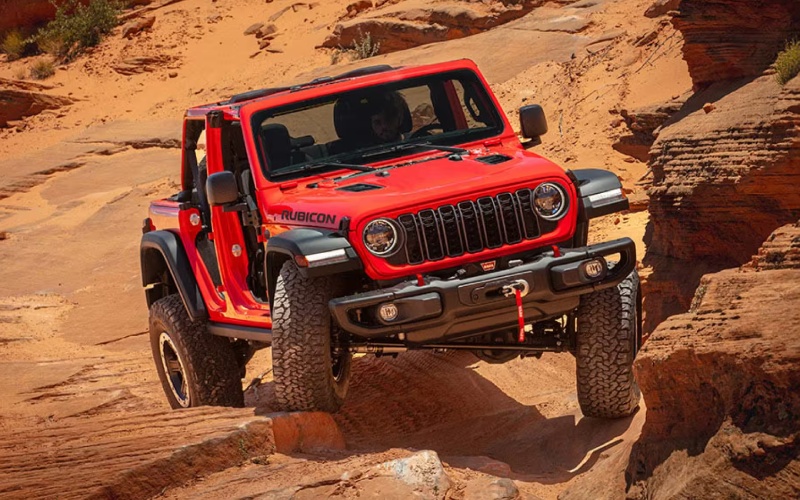
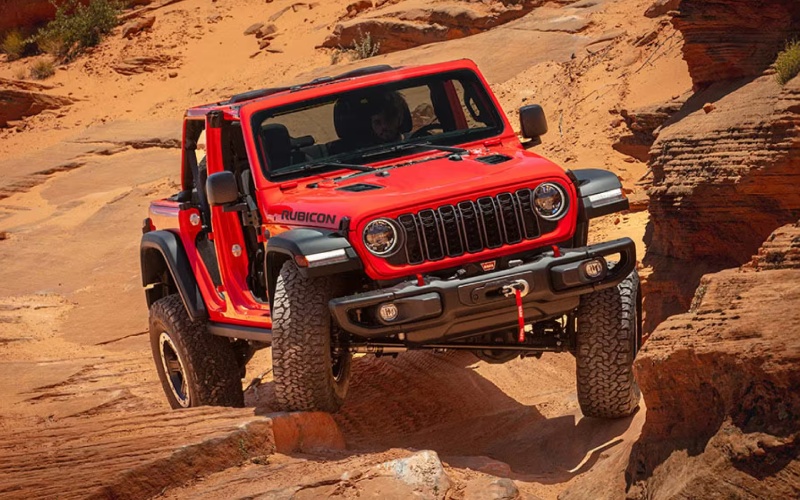
Wrangler employs solid axles front and rear. That design shines on steep switchbacks where diagonal ruts try to lift a tire. With a solid front axle, when one wheel compresses, the other is encouraged to extend, maintaining contact and traction. Bronco counters with an independent front suspension (IFS), which offers refined on-road manners and high-speed rough-road control, but it can be more prone to lifting a front wheel during slow, cross-axle articulation. On off-camber shelves or uneven steps, Wrangler’s solid axle provides a consistent, planted feel that many trail drivers prefer.
Add the Wrangler Rubicon’s electronic sway-bar disconnect and Tru-Lok locking differentials, and you can increase articulation and evenly split torque to both wheels on an axle. Bronco’s locking differentials and trail tech are excellent, yet the combination of solid axle plus sway-bar disconnect gives Wrangler a repeatable edge when obstacles demand maximum contact.
Gearing and Crawl Ratio: The Slow-Speed Control Advantage
Controlling tires at one mile per hour on loose rock is where gearing depth matters. The Wrangler’s available Rock-Trac system with a 4:1 low range, combined with the manual transmission and available 4.88:1 axle ratio, delivers an available 100:1 crawl ratio. That lets you idle up ledges with minimal throttle input, reducing wheelspin and strain. Bronco offers crawler-focused gearing as well—especially in trims aimed at technical terrain—and it’s impressive, but it does not match Wrangler’s 100:1 capability. For Centennial-area trails where step-ups and tight hairpins pile up, that last bit of gearing headroom can be the difference between a calm ascent and a do-over.
Traction Tech and Cameras: Seeing the Line, Holding the Line
Both SUVs bring cameras and traction management to the party. Wrangler’s available TrailCam forward view helps place tires precisely when you can’t see the ground from the driver’s seat. Bronco’s 360-degree camera is similarly helpful, especially in tighter forests where mirrors come close to brush. On the traction front, each model offers selectable drive modes and available lockers. Wrangler’s Selec-Speed Control makes slow descents less nerve-racking—particularly useful on loose shale where riding the brakes can induce slides. Bronco’s Trail Control provides similar benefits. The deciding factor often comes back to axle behavior: the Wrangler’s articulation limits reliance on electronics to hold the line.
Open-Air Design and Usability: The “Last-Minute Plan” Test
Open-air adventure is core to both nameplates, but the way you get there differs. Wrangler now features tool-free quick-release doors, making it realistic to pull the doors in your garage before you leave. Tops range from the Freedom Top three-piece hardtop to soft tops and the available Sky One-Touch power top that retracts at the press of a button. Bronco’s removable doors and roof are well-executed, but door removal requires tools and a bit more time. If you’re the type who decides at 3 p.m. to chase sunset views and wants the cabin open by 3:10, Wrangler’s setup supports that spontaneity.
One more practical difference: Wrangler’s fold-down windshield. It’s a niche feature, but for drivers who want the full immersive view on mellow stretches, it’s uniquely satisfying and easy to reverse when you head home.
Towing and Long-Weekend Logistics
If you tow a small overland trailer or a pair of dirt bikes, Wrangler 4-door offers a max tow rating up to 5,000 pounds when properly equipped, while Bronco tops out lower. That extra margin adds planning flexibility if your gear list grows. For RV owners, Wrangler’s transfer case Neutral and flat-tow readiness continue to simplify hookups for long loops into the high country.
Cabin tech is a wash in the best way: both SUVs offer a large central screen with Apple CarPlay and Android Auto to keep navigation and communication seamless. Wrangler’s 12.3-inch Uconnect 5 NAV stands out for its responsiveness and trail-centric pages, while Bronco keeps pace with useful off-road status displays.
Quick Trail-Focused Highlights
- Axles and articulation: Wrangler’s solid front and rear axles excel at cross-axle traction on slow, technical routes.
- Gearing depth: Wrangler’s available 100:1 crawl ratio prioritizes low-speed control on ledges and switchbacks.
- Open-air ease: Tool-free door removal and an available power top make last-minute open-air drives simple.
- Tow flexibility: A higher 4-door max tow rating (properly equipped) broadens trip and equipment options.
Safety and upfit practicality matter, too. Wrangler’s decision to locate front radar sensors above the rearview mirror preserves compatibility with steel bumpers and a factory-installed WARN winch. If you plan to add protection and recovery gear right away, that small detail smooths the build process.
So, which is better for steep switchbacks around Centennial, CO? If your priority is slow-speed control, cross-axle traction, and easy open-air spontaneity, the Wrangler stacks the deck with its axle design, gearing, and top-and-door ecosystem. Bronco fans will rightly praise its composure at speed and broad feature set, but on tight, technical climbs, the Wrangler’s fundamentals tend to feel more composed and predictable.
For test drives, hands-on comparisons of tops and doors, and guidance on tire, axle, and 4x4 system choices, Perkins Motors offers deep Wrangler product expertise and local trail insight—so your build aligns with how and where you actually drive.
Frequently Asked Questions:
Is the Wrangler’s 100:1 crawl ratio really noticeable on local trails?
Yes. On tight, rocky climbs, deeper gearing lets you idle over ledges with less throttle. That means fewer wheel-spin events and smoother progress on switchbacks and step-ups common to Front Range routes.
How much work is it to go doorless and roof-open before a quick trail run?
On Wrangler, door removal is tool-free, and the available Sky One-Touch power top retracts with a button press. Bronco’s doors are removable but require tools; plan a bit more time.
Which model tows more for a long-weekend setup?
When properly equipped, the Wrangler 4-door offers a higher max tow rating, giving you additional flexibility for small trailers or a heavier loadout.
Will steel bumpers and a winch interfere with driver-assistance sensors?
Wrangler places key radar sensors above the rearview mirror, preserving compatibility with winch-capable steel bumpers. Always verify accessory fitment before installation on any vehicle.
Ready to build a rig that fits your trails? Our team is serving Pueblo, Castle Rock, and Centennial with tailored advice on gearing, tires, and factory off-road packages so you can pick confidently and hit the trail sooner.


